

West Highland White Terrier ‘Westie’ Facts You May Not Know
Don’t let those dark, beguiling eyes and that brilliant white coat lull you into a false sense of security. The West Highland White Terrier is anything but a lapdog. The Westie is a tenacious, spirited dog built for hard work. A family favorite and loyal companion, these dogs thrive in high-energy households, but can easily adapt to apartment life with adequate stimulation. Learn more about the breed with these Westie fun facts.


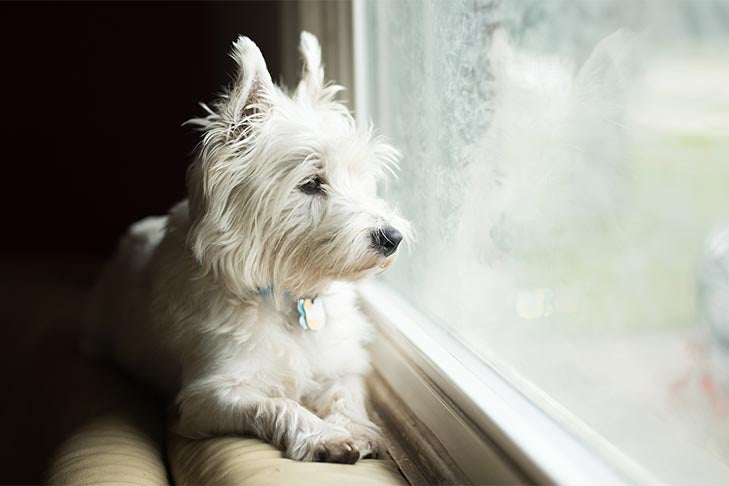
Westies Were Bred to Hunt Vermin
The West Highland White Terrier originated from “the mists of the Scottish hills,” thought to have descended from the same branch that yielded the Scottish, Dandie Dinmont, Cairn, and Skye Terriers. Despite their modest size (standing between 10 and 11 inches at the withers for females and males, respectively), these fearless, strong-willed dogs were used to eradicate vermin from farms, mines, and large estates.
The Westie emerged as a distinct terrier breed in the mid-1700s thanks to refinement by the Malcolm Clan, who needed a tenacious, hardworking dog to eliminate pests from their Scottish estate. The Westie may have ties even further back, as some believe that the breed descended from dogs kept by King James I (1566-1625).
Fast-forward a few centuries, and the West Highland White Terrier was recognized as an official breed in 1907 at England’s Crufts dog show. The AKC formally recognized the Westie in 1908, and two years later, breed enthusiasts founded the West Highland White Terrier Club of America (WHWTCA).
They’re One of the Most Popular Terriers
Westies have come a long way from their origins as working dogs. Today, they’re a familiar sight in homes across the nation, ranking among the most popular breeds.
There are many reasons for this willful dog’s popularity. For starters, this versatile breed makes an excellent companion and athlete. Another reason is their love of family. They bond closely with their owners and enjoy children, particularly those who respect this feisty terrier’s boundaries. The West Highland White is always eager for a game of catch or fetch. You can even train them to play soccer!
Legend Attributes Their Iconic Coat to a Hunting Accident
As the name suggests, the West Highland White Terrier comes in only one acceptable color: solid white. According to the breed standard, a hard, straight coat with some wheaten tipping is preferable to a soft white coat.
But why does the closely related Scottish Terrier come in three colors, rather than one? Why is the West Highland White Terrier white? Legend attributes the reason to a tragic hunting accident. According to the WHWTCA, Colonel Edward Donald Malcolm, of Poltalloch, Argyllshire, Scotland, shot one of his reddish terriers, mistaking it for a fox. Vowing not to repeat the incident, the Malcolm Clan focused on creating a snow-white dog — a sharp contrast to the earthly-colored Scottish terrain.
Regular Grooming Is a Must for Westies
To keep a Westie’s coat in its ideal form, regular grooming is key. Many Westie owners opt to have their dogs’ bodies clippered, accentuating the breed’s physique while keeping the head rounded and hair trimmed close to the eyes. With this style, it’s best to visit the groomer once every 4–6 weeks.
If you’re looking to enter your West Highland White Terrier in a conformation competition, your grooming routine will change greatly. Then, you would opt for hand-stripping, a labor-intensive process that involves plucking dead strands of hair by hand. The result is a medium-length, hard double coat that is water-repellant and easily sheds sand and dirt.
Many dog show handlers recommend grooming their dogs every 1–3 weeks. Grooming helps prevent dry skin, itching, and irritation. The best schedule for your Westie depends on several factors, including your dog’s activity level and your personal preferences.
You Could Pull a Trapped Westie by Their Tail
The West Highland White Terrier is more than a pretty face; they also have a distinct physical feature, refined over generations of selective breeding. The base of their spine boasts four equally shaped vertebrae, giving the tail its trademark, carrot-shaped appearance. But wait! There’s more. If you should ever find your prey-driven terrier stuck in an animal’s burrow or a self-dug hole, you can pull them out by their tail without the risk of serious injury.
These dogs also have a loud, persistent bark that alerts their owners when they get stuck while hunting for prey. In the breed’s working days, an owner could hear their dog bark, follow the incessant cries, and identify their dog’s location.
They’re a Familiar Face in Popular Media
The Westie’s vivacious demeanor has made them a popular choice in many popular marketing campaigns and other media. Perhaps one of the most recognizable is the smiling mascot of the Cesar dog food brand. Aside from the breed’s inherent star quality, the brand chose the terrier for its strong, muscular build and origins as a hunting dog that requires good nutrition. The Westie has been the company’s long-standing mascot for years. The dog has had many names through the years, including “Duffy,” “Daisy,” and now “Louna.”
Black & White Scotch Whisky, a popular drink that originated in Scotland, also features a white Westie and a black Scottish Terrier on the bottle. Fans of the animated comedy “King of the Hill” will also recognize the Westie as the Souphanousinphone’s dog, named “Doggy,” who appears in a handful of episodes. The breed’s reputation as a small, feisty dog is often contrasted with the Hills’ even-tempered Bloodhound.
Westies Can Enjoy Generous Lifespans
Smaller dogs generally enjoy longer lifespans than their larger counterparts. But, the West Highland White Terrier takes this to an entirely different level. On average, these dogs live 13–15 years, with the WHWTCA noting that they can reach their Sweet Sixteen.
While a dog’s longevity isn’t guaranteed, there are a few steps owners can take to promote their pet’s health and well-being, including feeding a protein-rich diet and providing proper exercise.
West Highland White Terriers Love to Dig
Digging is an instinctive behavior that compels many dogs to turn once-pristine lawns into their own archeological sites. The West Highland White Terrier is undoubtedly no exception.
You have a few options for preventing your Westie from destroying your flowerbed. You can use positive reinforcement-based methods to encourage good behavior or high-value rewards to redirect your dog when they prepare to start burrowing
Here’s another alternative: lean into your Westie’s digging instincts and make it fun. For instance, you could get a sandbox, bury your dog’s toys, and watch as they start tunneling.
Westies Are Smart, and They Know It
West Highland White Terriers an easily master commands, but they have an independent streak that requires patience and positive reinforcement to overcome. Consistent training sessions are key when teaching Westies new skills. While they learn tricks quickly, training usually requires plenty of treats and a good sense of humor.
These Independent Dogs Need Lots of Exercise
A popular misconception is that the smaller the dog, the smaller the commitment, space, and activity they need. That is not the case with any pet, and that certainly applies to the Westie.
Not at all suited to a sedentary, slow-paced lifestyle, this breed has boundless energy that must be harnessed and shaped early to prevent common problem behaviors.
With time, love, and consistent socialization, Westies bond closely with their owners and capture hearts with their antics and vibrant personalities.