
Original planning worksheet · SHUPA PET DOG — one routine, two people, seven days. This is a practical household coordination guide, not a veterinary treatment plan. The example names and schedule are fictional.
Two people can both love the same dog and still accidentally repeat a meal, assume the other person walked the dog, or forget an important handover. The solution is not a longer list of chores. It is a short, visible record that answers three questions: What was planned? What actually happened? Who takes over if the first person cannot?
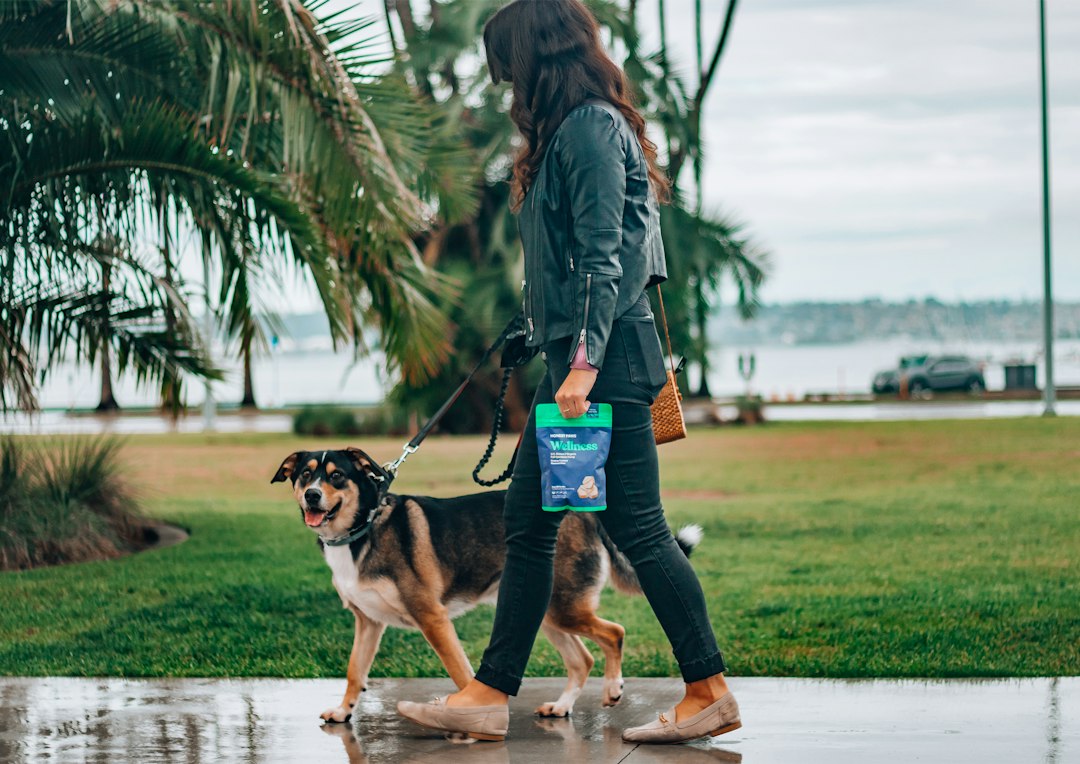
Illustrative photo: Honest Paws / Unsplash. The worksheets and scenarios below were composed as original examples, not as observations of photographed people or animals.
1. Start with five non-negotiable facts
Write down your dog’s preferred name, identification information, current veterinary contact, approved feeding instructions, and the name of the person authorized to make a decision. Store sensitive information privately. A printed sheet on the fridge can show task status without exposing phone numbers to visitors.
| Fact | Example entry | Why it matters |
|---|---|---|
| Caregiver backup | Alex → Jordan → agreed backup | A missed shift has an owner. |
| Walk instruction | Morning route; leash and harness location | The next person does not guess. |
| Food instruction | Follow dog’s current labelled feeding plan | No one invents a quantity. |
| Health exception | Call the vet; follow existing written plan | Care notes are not treatment advice. |
| Emergency contact | Saved privately; displayed only to authorized carers | Contact details remain controlled. |
2. Replace the two-column to-do list with a three-state handoff
A checkbox marked simply ‘done’ does not say who completed it or when. For each task, use planned → completed with time → handed over. If there is no completion time, treat the status as unknown rather than assuming it happened. In particular, do not add extra food or medication to ‘make up’ for an uncertain task. Resolve the uncertainty against written records and contact a veterinarian for medication questions.
| Task | Primary | Backup | Evidence of completion |
|---|---|---|---|
| Morning food | Alex | Jordan | Time + initials + any change from instructions |
| First walk | Jordan | Alex | Time + route adjustment if needed |
| Water check | Whoever is home | Other adult | Time checked; clean bowl status |
| Evening enrichment | Alex | Jordan | Activity and duration, as actually observed |
| Night check | Jordan | Alex | Door, leash, resting space checked |
3. A fictional Tuesday that shows why the handoff matters
07:20: Jordan is delayed on a commute. The walk remains ‘planned’, not ‘done’. At 07:30 Alex acknowledges the handover and walks the dog. At 07:52 Alex records completion. At 08:10 Jordan sees the updated entry and does not repeat the morning walk automatically.
18:00: Alex leaves a message that dinner was prepared but not served. Jordan checks the bowl and shared log before giving the dog’s prescribed portion. The lesson is not to rely on a text that says ‘I took care of it’; the log should identify the action that really happened.
4. Copy this seven-day planner
Print one row per day and keep the entries deliberately short. The table below is a blank template; fill it with your actual names and care instructions.
| Day | Morning completed by / time | Evening completed by / time | Exceptions + next person |
|---|---|---|---|
| Mon | ________ | ________ | ________ |
| Tue | ________ | ________ | ________ |
| Wed | ________ | ________ | ________ |
| Thu | ________ | ________ | ________ |
| Fri | ________ | ________ | ________ |
| Sat | ________ | ________ | ________ |
| Sun | ________ | ________ | ________ |
5. Make a fallback rule before anyone is unavailable
A useful fallback rule needs four parts: the trigger (for example, the primary caregiver cannot arrive), the deadline to acknowledge it, the named backup, and the way completion will be confirmed. ‘Someone will do it’ is not a fallback rule. A backup who never received the dog’s current instructions is not ready.
For a one-off absence, agree who will take over and when. For repeated absences, simplify the number of daily steps or arrange a qualified walker or sitter. Keep access instructions private and share them only with authorized people.
6. Use a review log, not a guilt log
After seven days, count: (a) tasks completed as planned, (b) tasks reassigned in advance, and (c) tasks whose outcome remained unclear. Divide unclear outcomes by the number of planned tasks to find your uncertainty rate. Example: 3 unclear outcomes among 35 planned tasks means 3 ÷ 35 ≈ 8.6%. The example is a teaching calculation, not an industry benchmark.
Aim to reduce uncertainty before adding new activities. If the log is too cumbersome, retain only the two or three tasks most likely to be duplicated or missed.
7. When this worksheet is not enough
This record does not replace a veterinarian’s instructions, an urgent-care plan, or professional help for changes in appetite, unusual behaviour or mobility. Any medication name, dose or timing must come from the dog’s actual veterinary plan; this article deliberately does not provide one.
For occasional external caregivers, use our one-page sitter handover. For supplies that need refreshing, see the emergency bag and refill planner. This worksheet focuses on daily shared-household accountability, which is a different problem.
Editorial method: This article offers a reusable decision framework and illustrative household scenarios. We have not tested or surveyed a family, and we make no clinical claims. Reader feedback can be sent through the site’s contact page.